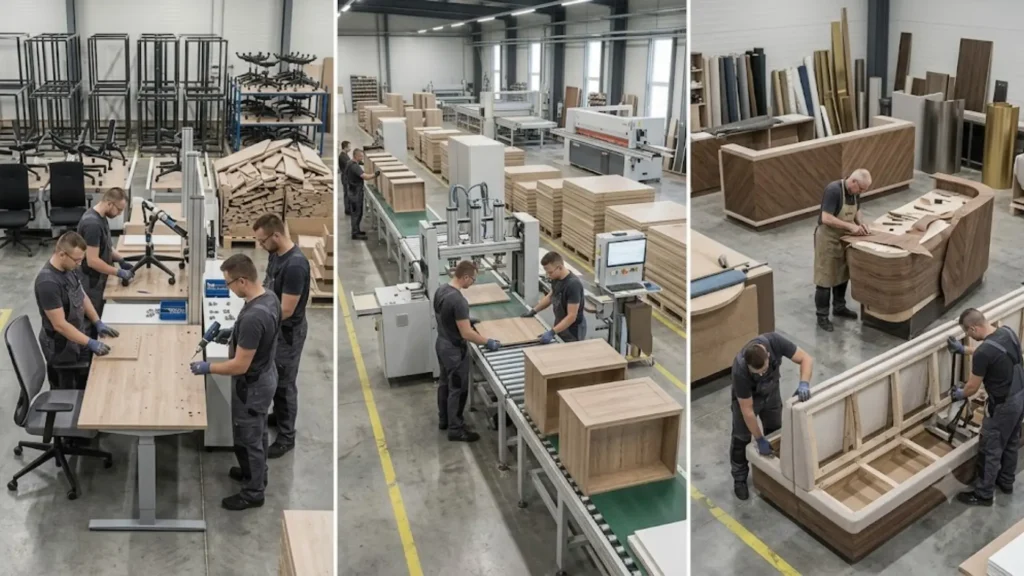



Furniture board specification compared across manufacturer types

Choosing Furniture Board by Manufacturer Type: A Segment Guide

Different furniture manufacturer segments — wholesale, office, kitchen, modular, custom, and hospitality — prioritize different things from a material supplier: wholesale needs volume consistency, office needs standardized specification, kitchen needs moisture resistance, modular needs precise repeatability, custom needs a wide finish range, and hospitality needs durability under heavy commercial use. Not every furniture manufacturer has […]

Choosing Furniture Board by Manufacturer Type: A Segment Guide Read More »

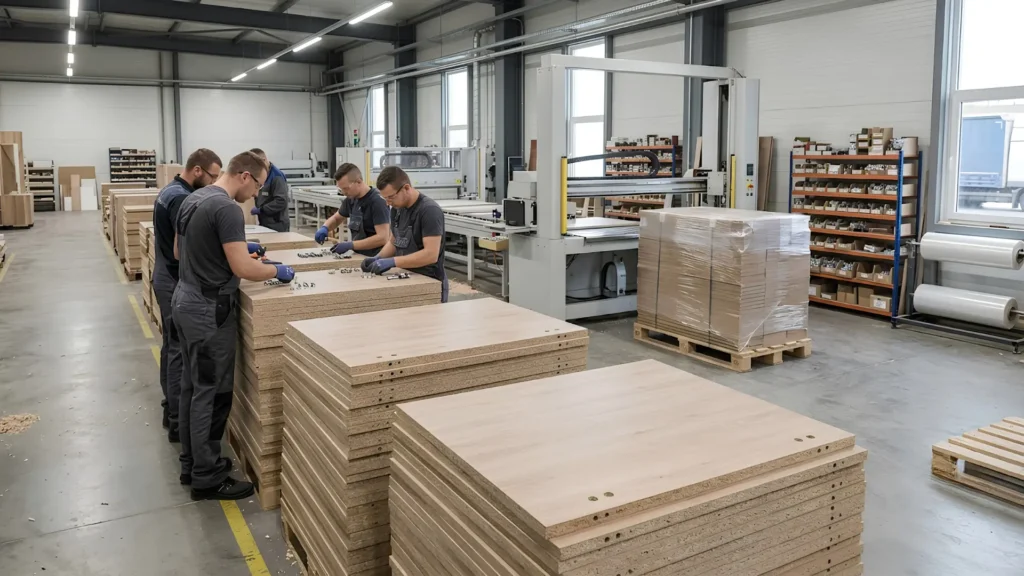
RTA flat-pack furniture panels with pre-drilled fittings and MFC finish

Material Specification for RTA and Flat-Pack Furniture Manufacturing

RTA (ready-to-assemble) and flat-pack furniture manufacturing depends on tight dimensional consistency, reliable screw-holding strength for repeated assembly/disassembly, and a pre-finished surface that survives flat-pack shipping without damage — particle board with an MFC finish is the standard specification for most RTA production. RTA and flat-pack furniture puts specific demands on panel material that don’t apply

Material Specification for RTA and Flat-Pack Furniture Manufacturing Read More »

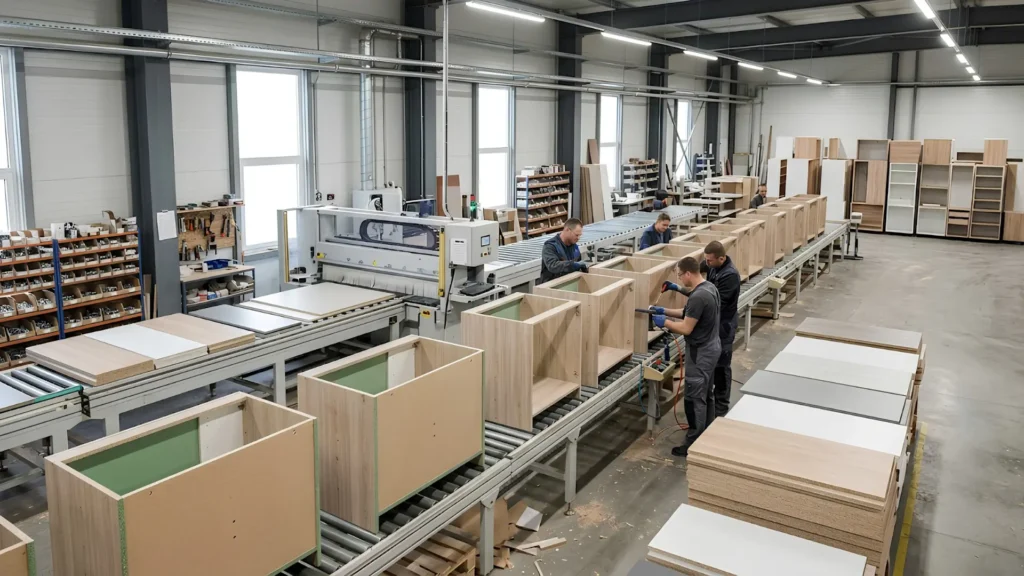
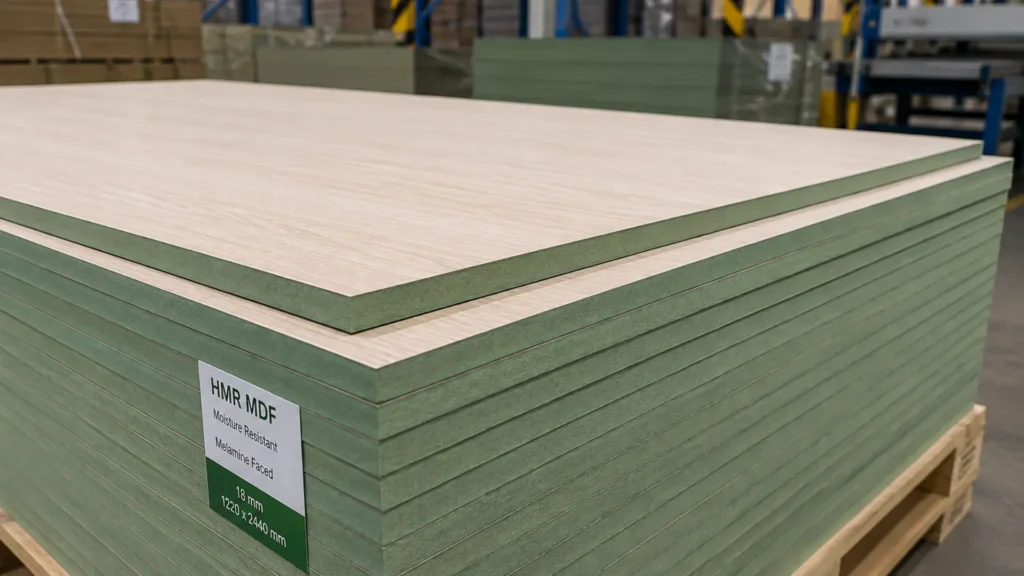
Kitchen cabinet manufacturer production using HMR particle board panels

Material Sourcing for Kitchen Cabinet Manufacturers

Kitchen cabinet manufacturers should specify HMR (moisture-resistant) core as standard, not an upgrade — the sustained humidity and splash exposure in kitchen environments make standard-grade particle board or MDF a reliability risk. Beyond core grade, colour consistency across large orders and supplier lead-time reliability are the two factors that most affect production schedules. Kitchen cabinets

Material Sourcing for Kitchen Cabinet Manufacturers Read More »

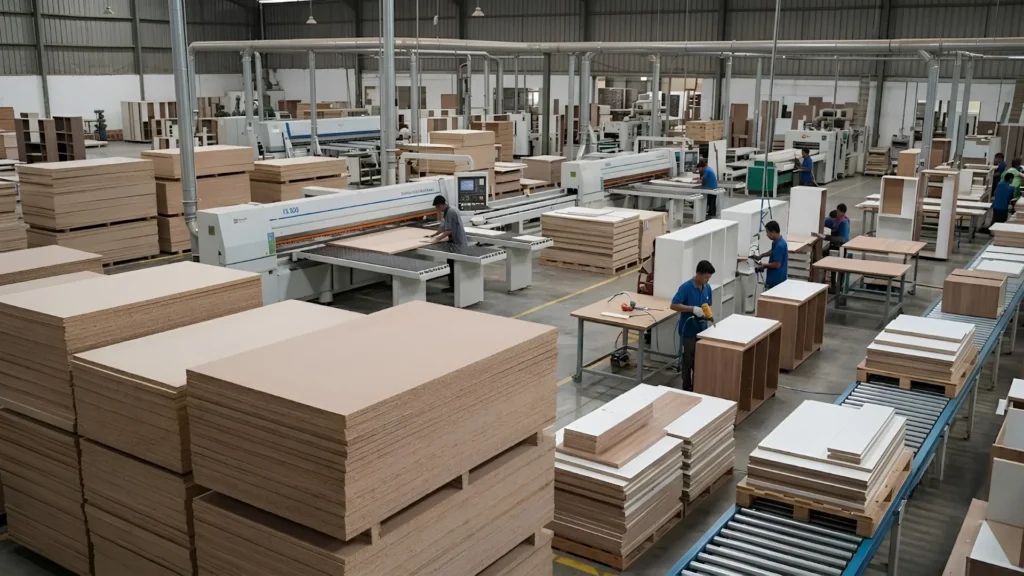
Furniture manufacturers production line using particle board and MFC panels

Best Engineered Wood Materials for Furniture Manufacturers: MFC, Particle Board & MDF Compared

Furniture manufacturers choosing between particle board, MFC (melamine faced chipboard), and MDF-based materials should match the choice to the production line — particle board and MFC suit high-volume flat-panel furniture with a pre-finished surface, while MDF suits painted, detailed, or thin-panel components. Sourcing from one supplier that offers both simplifies specification consistency across a product

Best Engineered Wood Materials for Furniture Manufacturers: MFC, Particle Board & MDF Compared Read More »

MDF board supplier lamination line producing melamine-faced panels

MDF Board Suppliers: How to Choose the Right Partner for Melamine-Faced Panels

Choosing an MDF board supplier for melamine-faced (MFF) panels comes down to four factors: core grade options (standard vs HMR/moisture-resistant), thickness range including thin specifications, lamination consistency, and how clearly they communicate custom lead times — since MDF-core melamine panels are typically made to order rather than held as ready stock. If you’re sourcing melamine-faced

MDF Board Suppliers: How to Choose the Right Partner for Melamine-Faced Panels Read More »

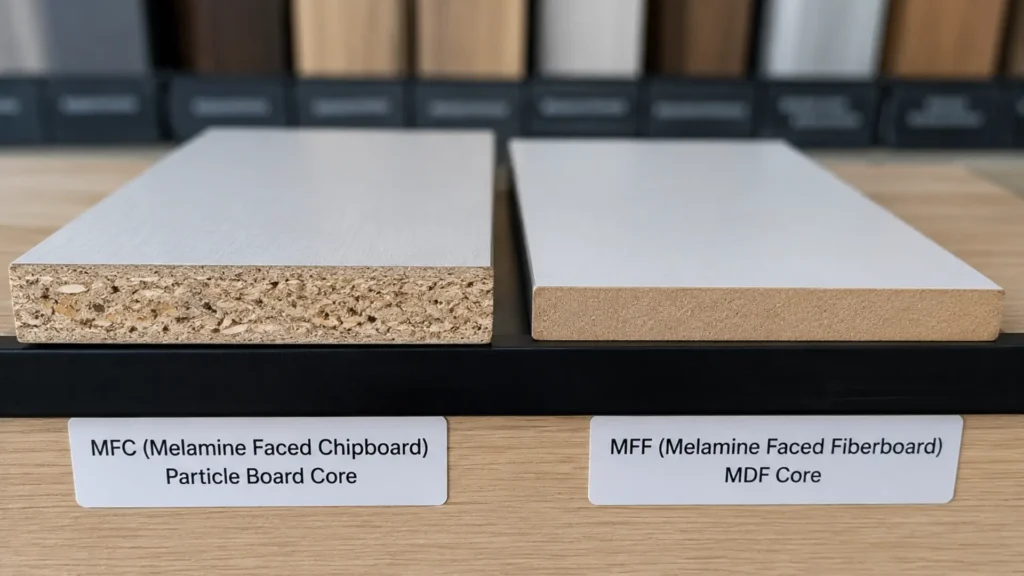
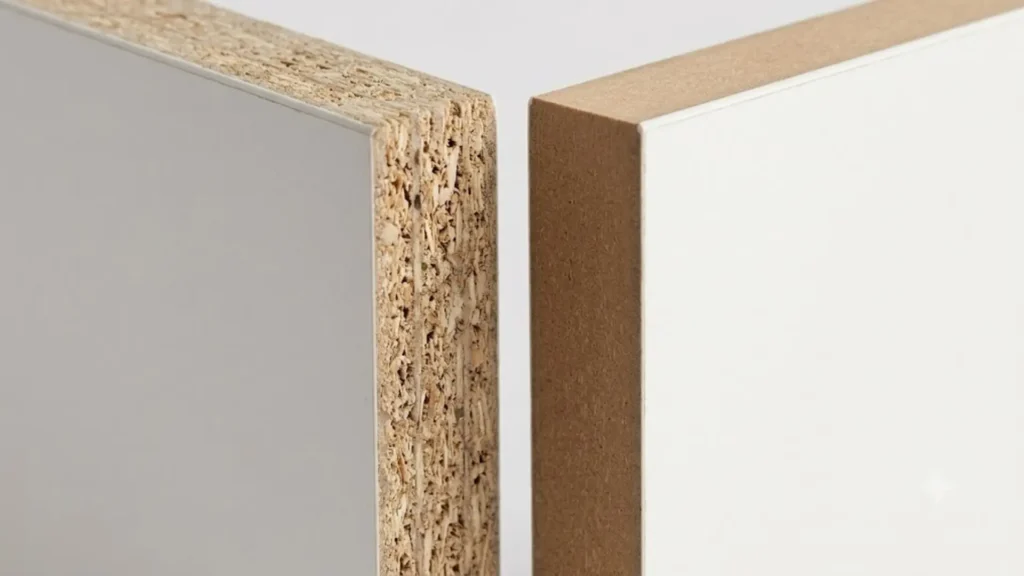
Melamine faced MDF cross-section compared to particle board core

Melamine Faced MDF (MFF): A Thinner, Paintable-Core Alternative to MFC

Melamine Faced MDF (MFF) is melamine surfacing applied to an MDF core instead of a particle board core — the same durable, pre-finished melamine surface as MFC, but on a smoother, denser base that supports thinner panels (down to 2.5–3mm) and finer edge detailing. Melamine faced board isn’t limited to a particle board core. When

Melamine Faced MDF (MFF): A Thinner, Paintable-Core Alternative to MFC Read More »

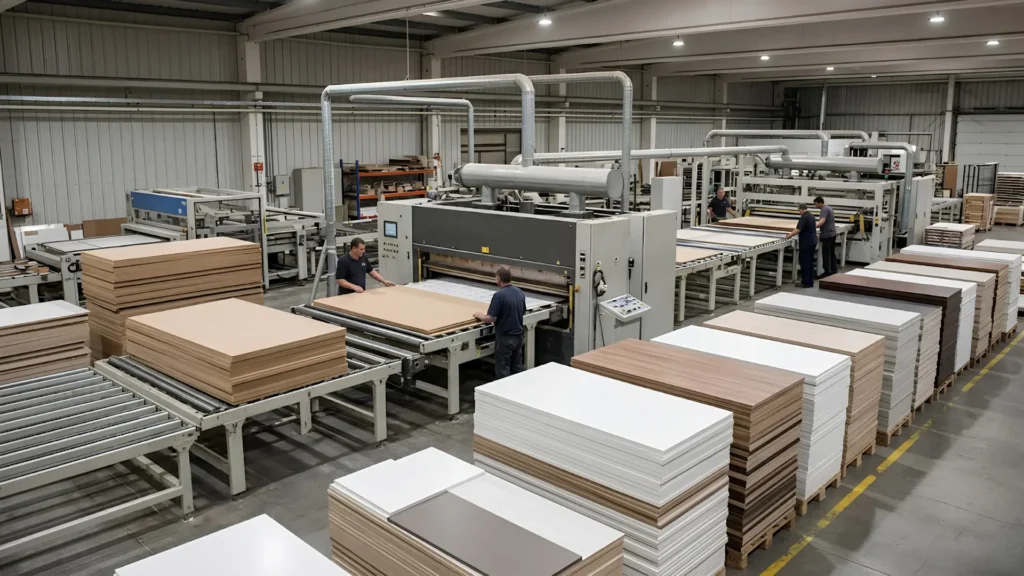
Melamine faced chipboard suppliers production line with continuous press

Melamine Faced Chipboard Suppliers: How to Choose the Right Manufacturer

Choosing a melamine faced chipboard (MFC) supplier for export or bulk orders comes down to five factors: production certification (JIS, FSC), press technology and consistency, core grade options (standard vs HMR), catalogue depth, and export/logistics experience. Price alone is a poor way to compare suppliers, since specification differences change the real cost. If you’re sourcing

Melamine Faced Chipboard Suppliers: How to Choose the Right Manufacturer Read More »

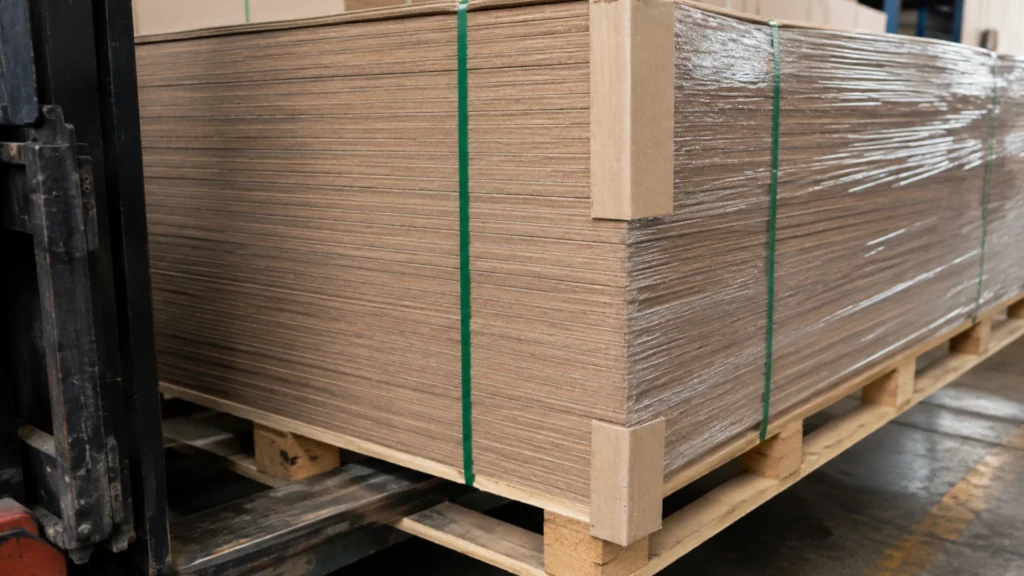
Stacked melamine board sheets relevant to melamine board price comparison

Melamine Board Price: What Actually Affects the Cost (2026 Buying Guide)

Melamine board price depends mainly on core type (particle board vs MDF vs HMR), whether the colour/pattern is ready-stock or custom, thickness, and order volume. As with any engineered panel, there’s no single fixed price — request a quote based on your exact specification. Melamine board price varies more than most buyers expect, because “melamine

Melamine Board Price: What Actually Affects the Cost (2026 Buying Guide) Read More »

MFC applications in kitchen cabinets and bathroom vanities with HMR core

MFC Applications in Kitchens and Bathrooms: A Practical Guide

Melamine Faced Chipboard (MFC) is one of the most popular materials in modern furniture, thanks to its affordability, wide range of finishes, and ease of fabrication. But kitchens and bathrooms are humid, high-use spaces — so does MFC actually hold up there? The short answer: yes, with the right core and the right precautions. This

MFC Applications in Kitchens and Bathrooms: A Practical Guide Read More »

Scroll to Top