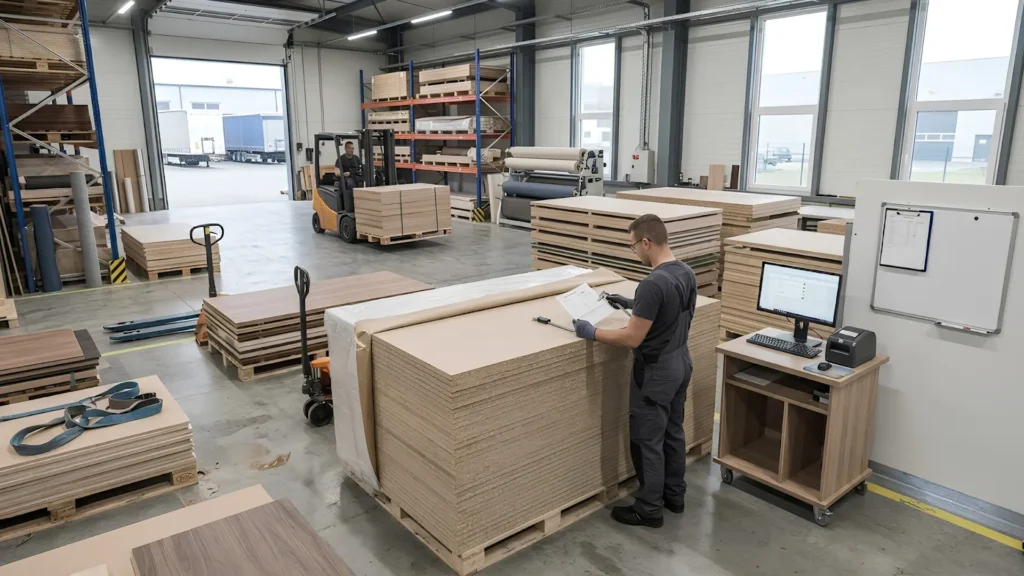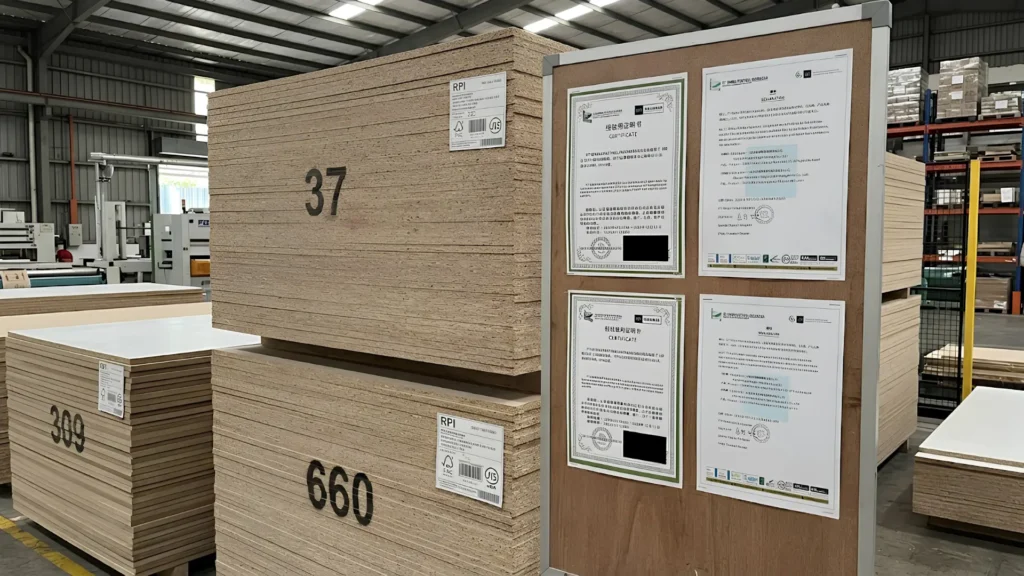



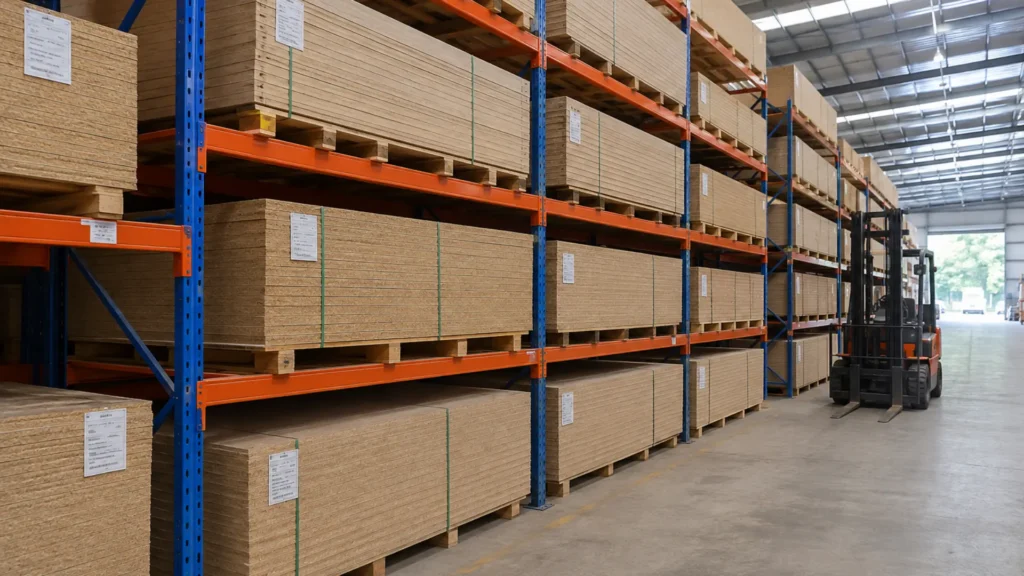
particle board storage handling

Storing and Handling Particle Board and MFC Before Fabrication: A Warehouse Guide

Quick answer: Particle board and MFC should be stored flat, off the ground, fully supported across their surface, and kept away from direct moisture and sharp humidity swings before cutting or fabrication. Panels brought into a new climate — especially after ocean freight — perform best when allowed to acclimatize to the workshop’s ambient humidity

Storing and Handling Particle Board and MFC Before Fabrication: A Warehouse Guide Read More »
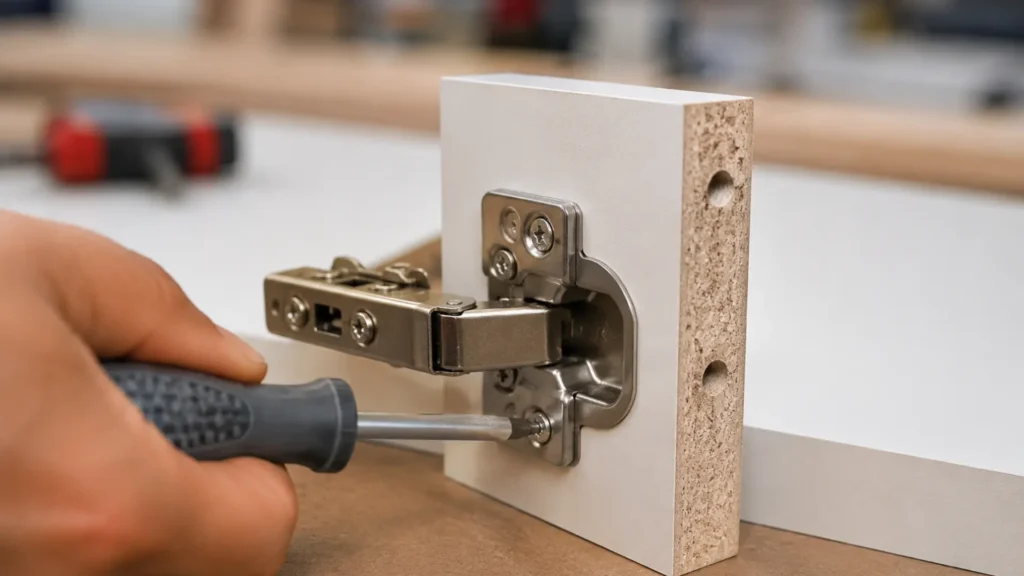
particle board screw holding capacity

Screw Holding Capacity in Particle Board and MFC: What Furniture Manufacturers Need to Know

Quick answer: Screw holding capacity — how firmly a panel grips a screw or fastener without pulling loose — depends mainly on board density, thickness, and where the fastener is placed (face vs. edge). Under JIS A 5908:2022, standard particle board of 15mm+ thickness must achieve a minimum face screw holding strength of 400N. Higher-density

Screw Holding Capacity in Particle Board and MFC: What Furniture Manufacturers Need to Know Read More »

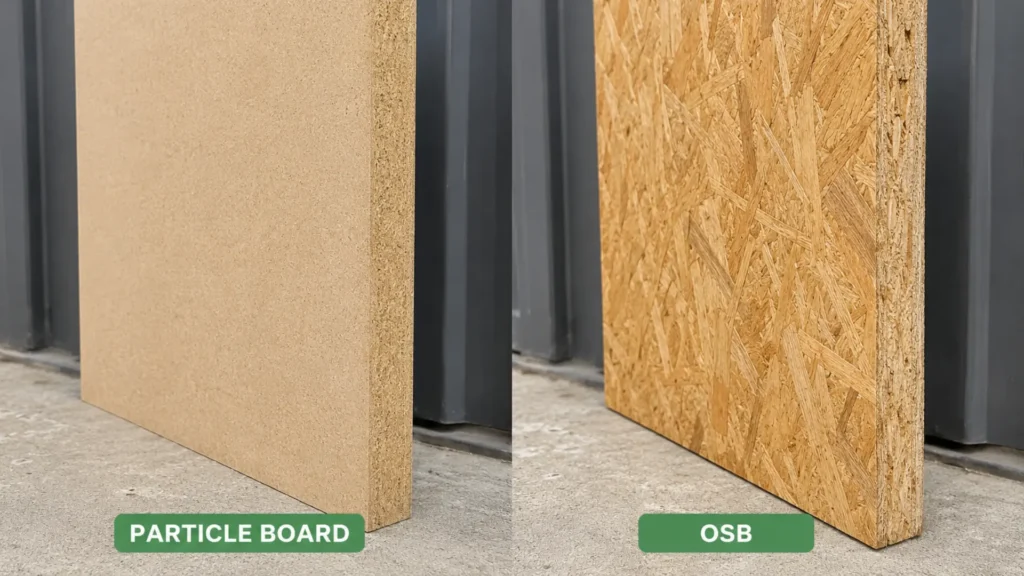
particle board vs osb

Particle Board vs OSB: What’s the Difference and Which Should You Choose?

Quick answer: Particle board and OSB (Oriented Strand Board) are both engineered wood panels, but they’re built differently and suited to different jobs. Particle board is made from small wood particles pressed into a smooth, uniform panel — ideal for furniture, cabinetry, and surfaces that will be laminated or veneered. OSB is made from larger

Particle Board vs OSB: What’s the Difference and Which Should You Choose? Read More »

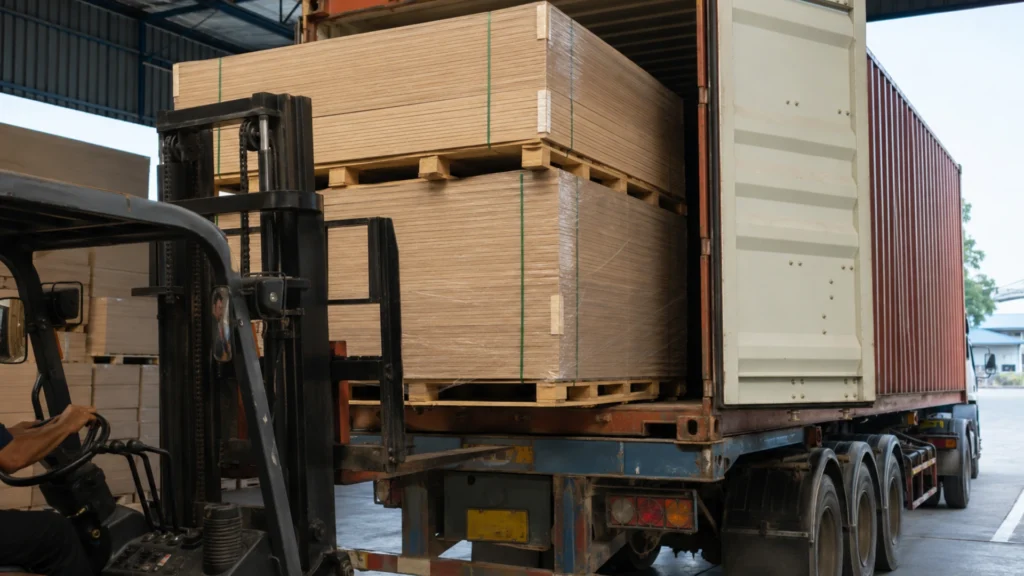
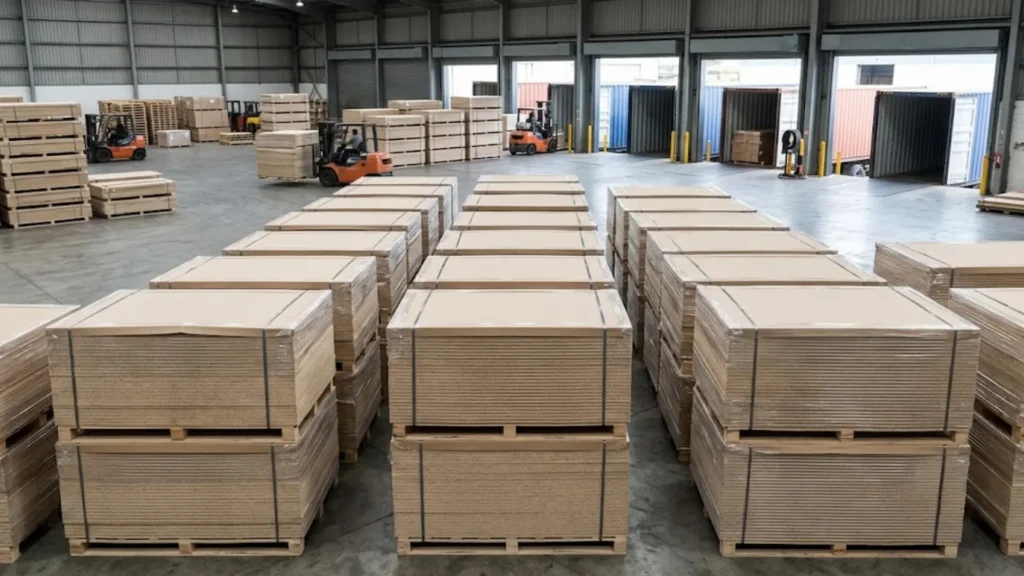
particle board container loading

How Many Sheets of Particle Board or MFC Fit in a Container? A Loading Guide for Buyers

Quick answer: For standard 4×8 ft (1,220 x 2,440mm) panels, an 18mm particle board or MFC shipment typically loads several hundred sheets into a 40ft High Cube container, but the exact count depends on thickness, density, pallet configuration, and the container’s weight limit — not just its volume. Weight, not space, is usually what fills

How Many Sheets of Particle Board or MFC Fit in a Container? A Loading Guide for Buyers Read More »

Furniture factory supply chain receiving panel material shipments

Building a Reliable Panel Material Supply Chain for Furniture Factories

A reliable panel material supply chain for a furniture factory depends less on finding the lowest price and more on lead-time predictability, specification consistency across orders, and having a backup sourcing plan for demand spikes or vendor disruption. Single-sourcing everything from one supplier simplifies quality control but creates a dependency risk worth planning around. For

Building a Reliable Panel Material Supply Chain for Furniture Factories Read More »

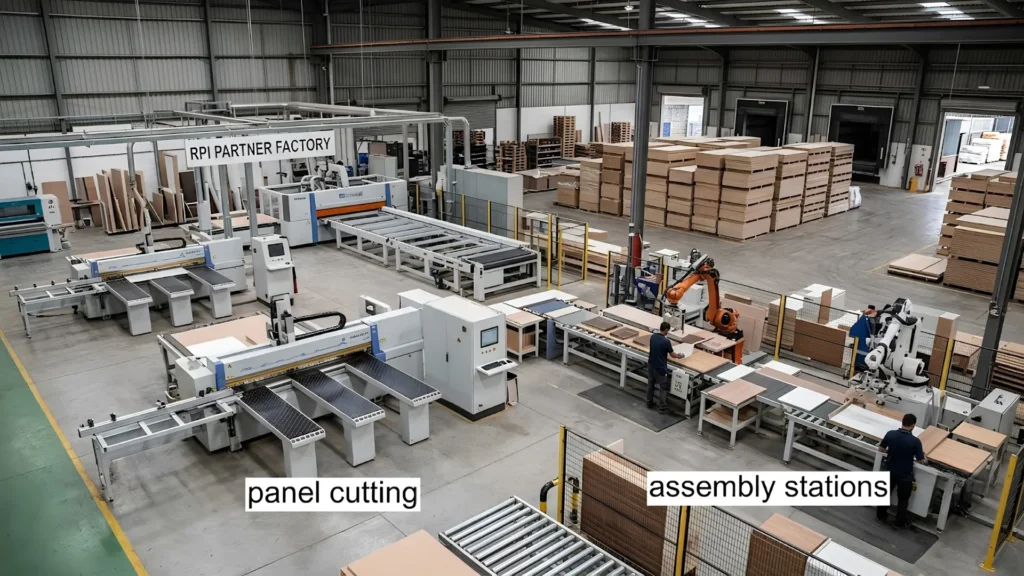
Furniture manufacturing facility using particle board and MFC panel material

Furniture Manufacturing: A Material Sourcing Guide for Producers

Furniture manufacturing at scale depends on consistent, certified engineered wood material — particle board, MFC, MDF, and MFF each suit different parts of a production line. Getting material selection and supplier reliability right affects production speed, finishing cost, and compliance with destination-market regulations. Whether you’re running an RTA (ready-to-assemble) furniture line, a cabinet factory, or

Furniture Manufacturing: A Material Sourcing Guide for Producers Read More »

RPI certifications including JIS, FSC, ISO, and CARB Phase 2 compliance documents

RPI Certifications: JIS, CARB-EPA, FSC, ISO & TKDN Explained

RPI’s particle board and MFC are backed by six certification categories: TKDN (Indonesian local-content compliance), JIS U-13/M-18 (Japanese panel strength standards), CARB Phase 2 and US-EPA (US formaldehyde emission limits), FSC Chain of Custody (traceable, sustainable timber sourcing), ISO 9001/14001/45001 (quality, environmental, and safety management), and KAN/Wood Legal accreditation (Indonesian timber legality). Together, these cover

RPI Certifications: JIS, CARB-EPA, FSC, ISO & TKDN Explained Read More »

Bulk chipboard and MFC pallets prepared for wholesale container shipment

Buying Particle Board and MFC in Bulk: Wholesale Orders, MOQ, and Factory Partnerships

Buying particle board or MFC in bulk directly from a manufacturer — rather than through a reseller — typically means better pricing at volume, but also means navigating minimum order quantities, lead times, and container logistics yourself. Understanding how factory-direct bulk ordering works helps you decide whether it’s the right sourcing model for your business.

Buying Particle Board and MFC in Bulk: Wholesale Orders, MOQ, and Factory Partnerships Read More »

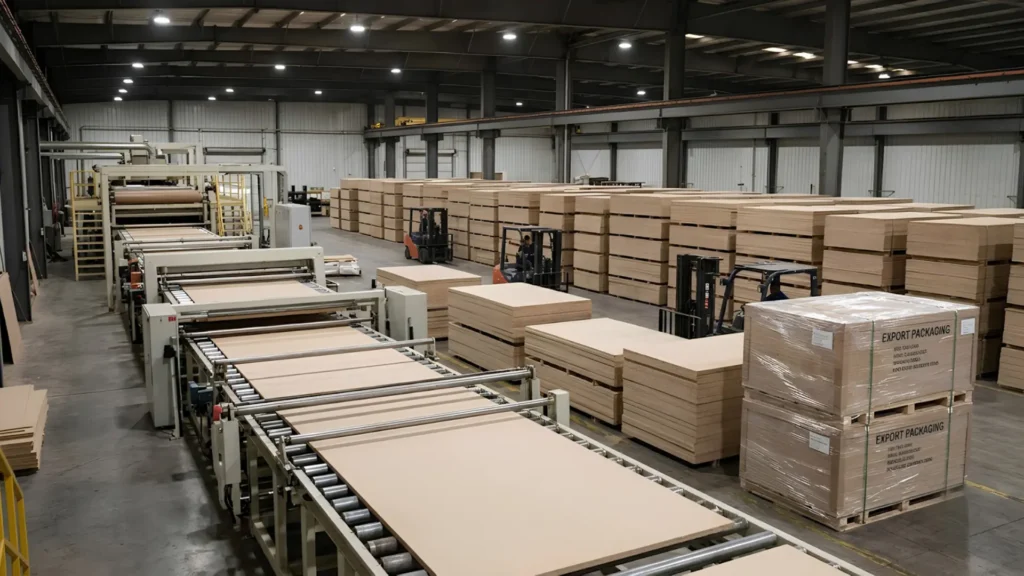
Particle board suppliers production line with stacked export-ready sheets

Particle Board Suppliers: How to Choose the Right Manufacturer

Choosing a particle board supplier for export or bulk orders comes down to production standard (JIS or equivalent), formaldehyde emission grade options, consistency across order volumes, and logistics experience. The lowest factory-gate price is rarely the lowest total cost once specification gaps and shipping reliability are factored in. Sourcing particle board for manufacturing, distribution, or

Particle Board Suppliers: How to Choose the Right Manufacturer Read More »

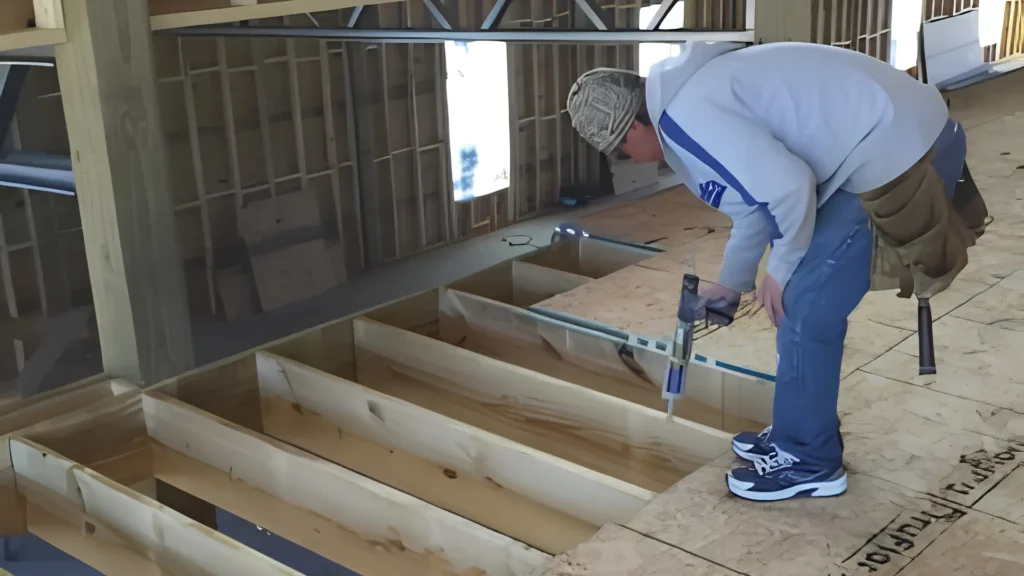
Particle board subfloor installation over floor joists

Particle Board as Subfloor and Underlayment: What You Need to Know

Particle board can be used as a subfloor or underlayment layer, but performance depends heavily on grade — standard particle board is only suitable for dry, low-moisture areas, while HMR (moisture-resistant) particle board is required anywhere humidity or occasional water exposure is a factor. Particle board is a common choice for subflooring and underlayment because

Particle Board as Subfloor and Underlayment: What You Need to Know Read More »

Scroll to Top