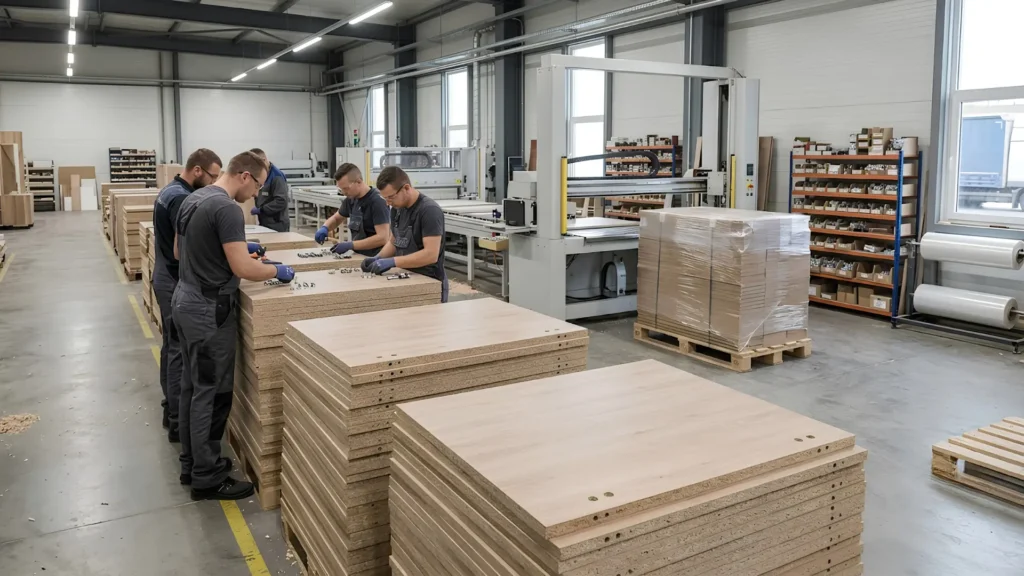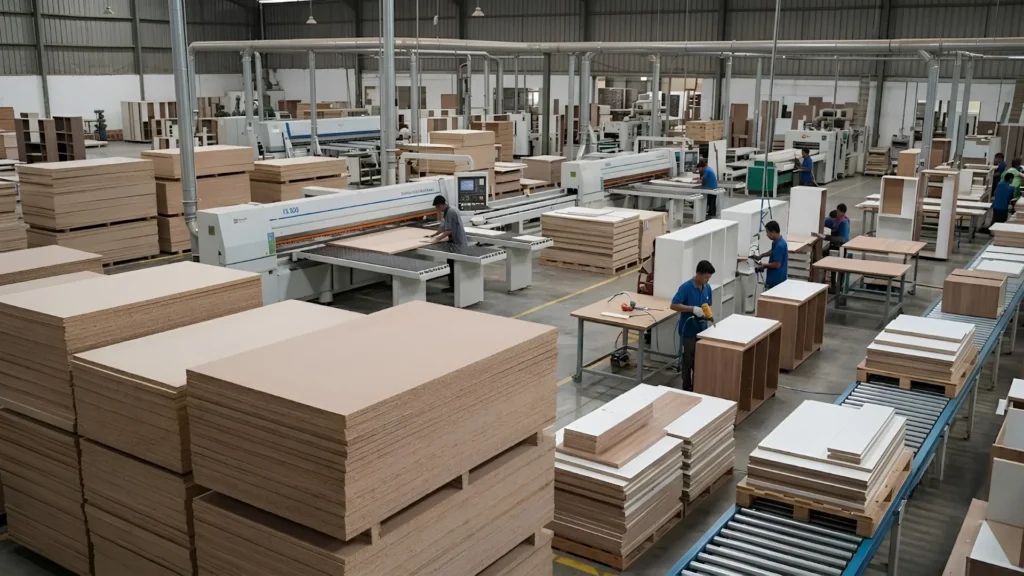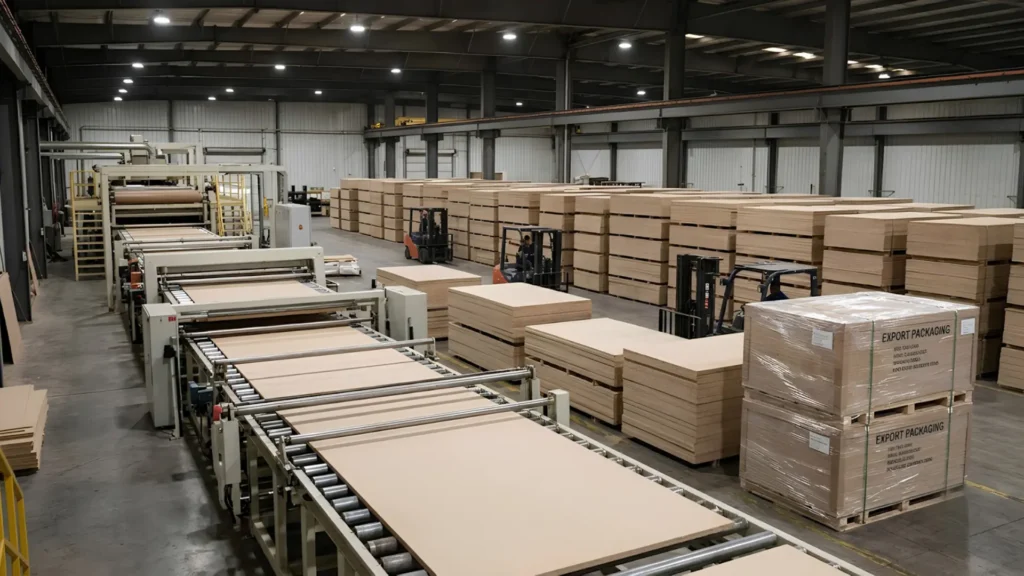



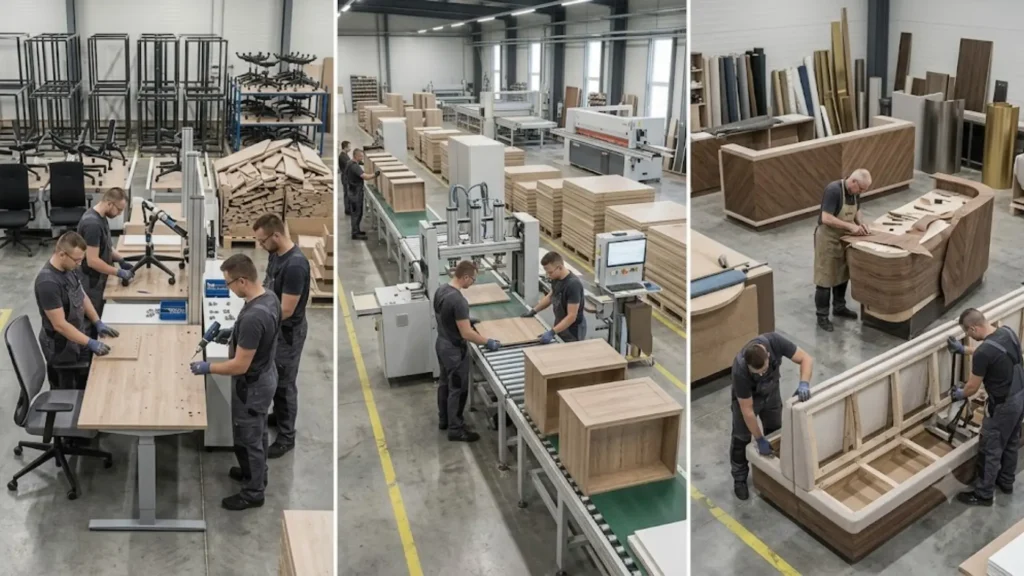
Kitchen cabinet manufacturer production using HMR particle board panels

Material Sourcing for Kitchen Cabinet Manufacturers

Kitchen cabinet manufacturers should specify HMR (moisture-resistant) core as standard, not an upgrade — the sustained humidity and splash exposure in kitchen environments make standard-grade particle board or MDF a reliability risk. Beyond core grade, colour consistency across large orders and supplier lead-time reliability are the two factors that most affect production schedules. Kitchen cabinets

Material Sourcing for Kitchen Cabinet Manufacturers Read More »

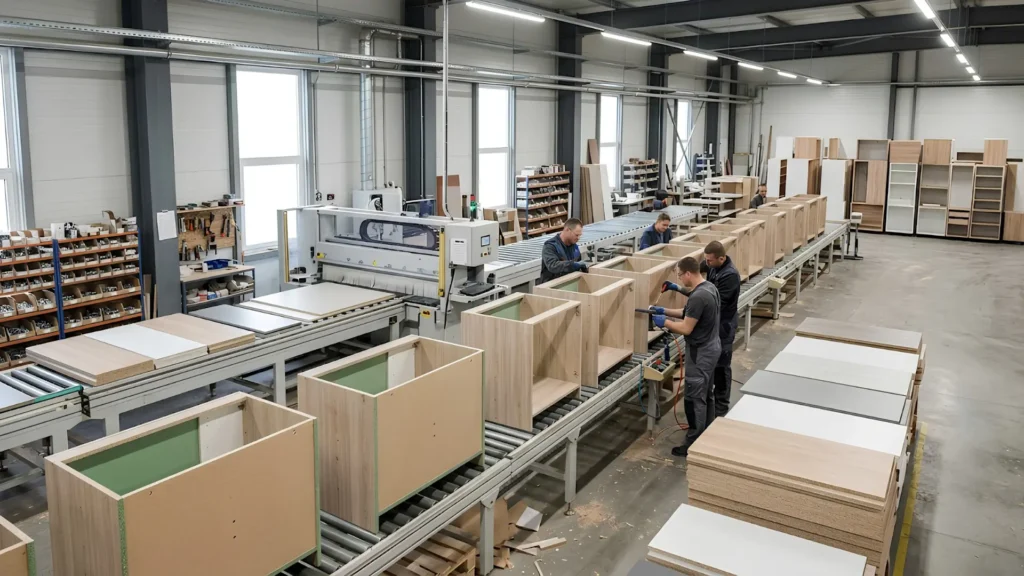
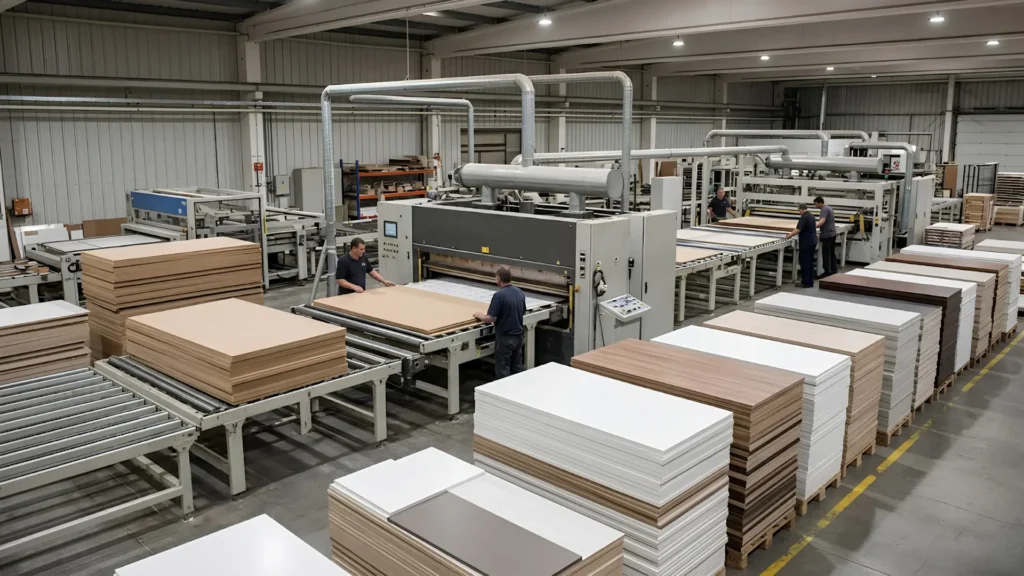
Furniture manufacturing facility using particle board and MFC panel material

Furniture Manufacturing: A Material Sourcing Guide for Producers

Furniture manufacturing at scale depends on consistent, certified engineered wood material — particle board, MFC, MDF, and MFF each suit different parts of a production line. Getting material selection and supplier reliability right affects production speed, finishing cost, and compliance with destination-market regulations. Whether you’re running an RTA (ready-to-assemble) furniture line, a cabinet factory, or

Furniture Manufacturing: A Material Sourcing Guide for Producers Read More »

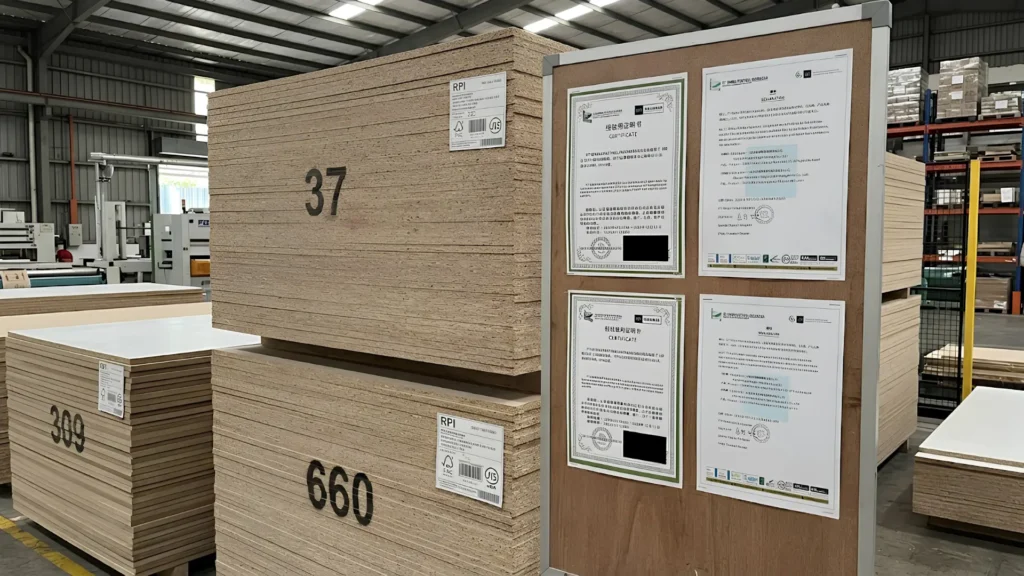
RPI certifications including JIS, FSC, ISO, and CARB Phase 2 compliance documents

RPI Certifications: JIS, CARB-EPA, FSC, ISO & TKDN Explained

RPI’s particle board and MFC are backed by six certification categories: TKDN (Indonesian local-content compliance), JIS U-13/M-18 (Japanese panel strength standards), CARB Phase 2 and US-EPA (US formaldehyde emission limits), FSC Chain of Custody (traceable, sustainable timber sourcing), ISO 9001/14001/45001 (quality, environmental, and safety management), and KAN/Wood Legal accreditation (Indonesian timber legality). Together, these cover

RPI Certifications: JIS, CARB-EPA, FSC, ISO & TKDN Explained Read More »

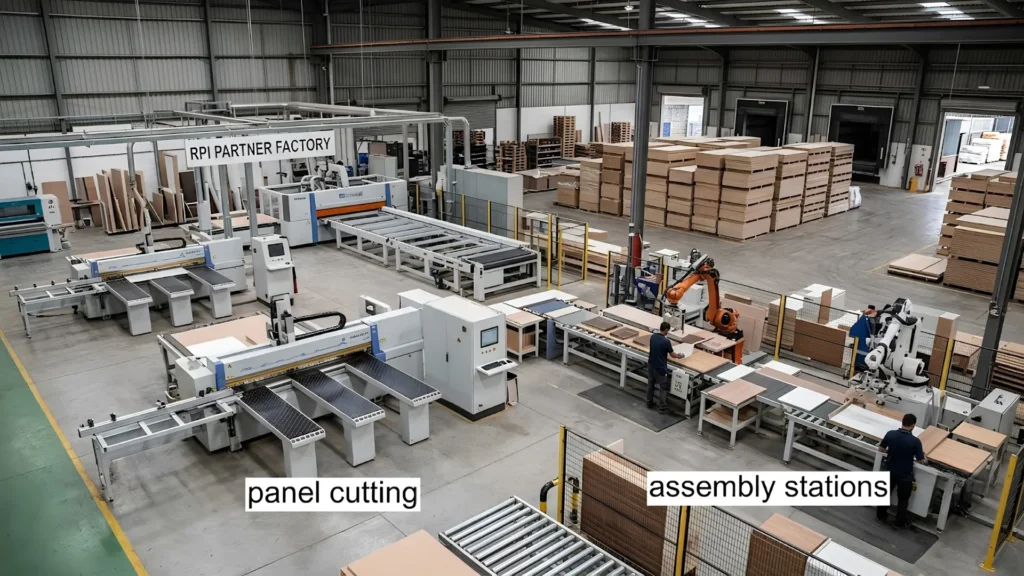
Furniture manufacturers production line using particle board and MFC panels

Best Engineered Wood Materials for Furniture Manufacturers: MFC, Particle Board & MDF Compared

Furniture manufacturers choosing between particle board, MFC (melamine faced chipboard), and MDF-based materials should match the choice to the production line — particle board and MFC suit high-volume flat-panel furniture with a pre-finished surface, while MDF suits painted, detailed, or thin-panel components. Sourcing from one supplier that offers both simplifies specification consistency across a product

Best Engineered Wood Materials for Furniture Manufacturers: MFC, Particle Board & MDF Compared Read More »

MDF board supplier lamination line producing melamine-faced panels

MDF Board Suppliers: How to Choose the Right Partner for Melamine-Faced Panels

Choosing an MDF board supplier for melamine-faced (MFF) panels comes down to four factors: core grade options (standard vs HMR/moisture-resistant), thickness range including thin specifications, lamination consistency, and how clearly they communicate custom lead times — since MDF-core melamine panels are typically made to order rather than held as ready stock. If you’re sourcing melamine-faced

MDF Board Suppliers: How to Choose the Right Partner for Melamine-Faced Panels Read More »

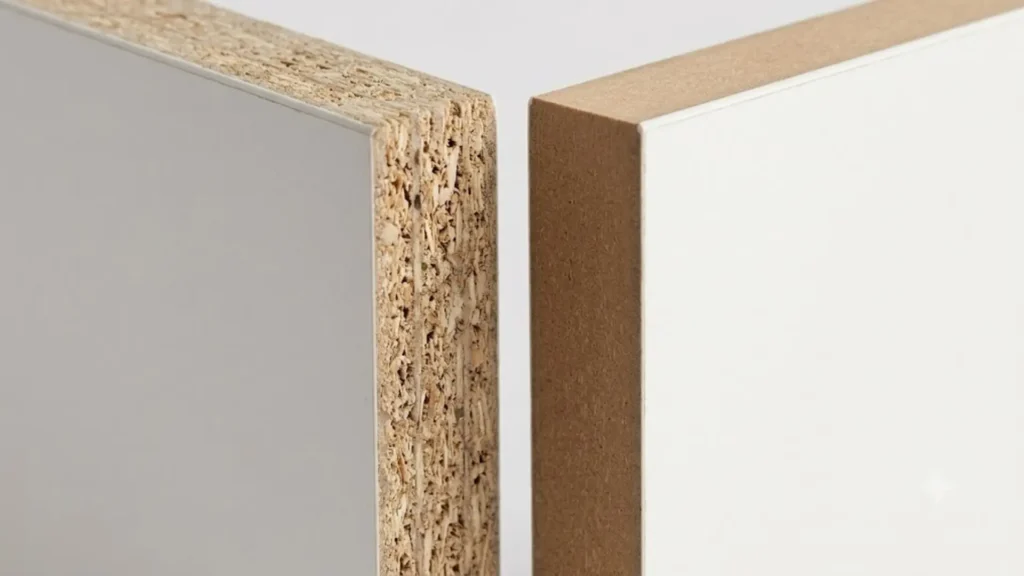
Melamine faced MDF cross-section compared to particle board core

Melamine Faced MDF (MFF): A Thinner, Paintable-Core Alternative to MFC

Melamine Faced MDF (MFF) is melamine surfacing applied to an MDF core instead of a particle board core — the same durable, pre-finished melamine surface as MFC, but on a smoother, denser base that supports thinner panels (down to 2.5–3mm) and finer edge detailing. Melamine faced board isn’t limited to a particle board core. When

Melamine Faced MDF (MFF): A Thinner, Paintable-Core Alternative to MFC Read More »

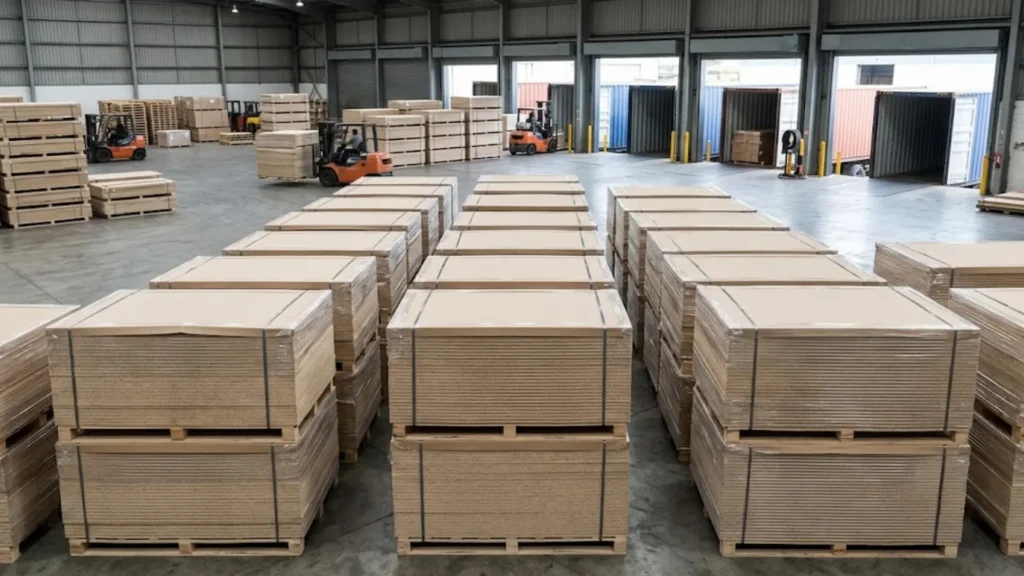
Bulk chipboard and MFC pallets prepared for wholesale container shipment

Buying Particle Board and MFC in Bulk: Wholesale Orders, MOQ, and Factory Partnerships

Buying particle board or MFC in bulk directly from a manufacturer — rather than through a reseller — typically means better pricing at volume, but also means navigating minimum order quantities, lead times, and container logistics yourself. Understanding how factory-direct bulk ordering works helps you decide whether it’s the right sourcing model for your business.

Buying Particle Board and MFC in Bulk: Wholesale Orders, MOQ, and Factory Partnerships Read More »

Particle board suppliers production line with stacked export-ready sheets

Particle Board Suppliers: How to Choose the Right Manufacturer

Choosing a particle board supplier for export or bulk orders comes down to production standard (JIS or equivalent), formaldehyde emission grade options, consistency across order volumes, and logistics experience. The lowest factory-gate price is rarely the lowest total cost once specification gaps and shipping reliability are factored in. Sourcing particle board for manufacturing, distribution, or

Particle Board Suppliers: How to Choose the Right Manufacturer Read More »

Melamine faced chipboard suppliers production line with continuous press

Melamine Faced Chipboard Suppliers: How to Choose the Right Manufacturer

Choosing a melamine faced chipboard (MFC) supplier for export or bulk orders comes down to five factors: production certification (JIS, FSC), press technology and consistency, core grade options (standard vs HMR), catalogue depth, and export/logistics experience. Price alone is a poor way to compare suppliers, since specification differences change the real cost. If you’re sourcing

Melamine Faced Chipboard Suppliers: How to Choose the Right Manufacturer Read More »

Particle board subfloor installation over floor joists

Particle Board as Subfloor and Underlayment: What You Need to Know

Particle board can be used as a subfloor or underlayment layer, but performance depends heavily on grade — standard particle board is only suitable for dry, low-moisture areas, while HMR (moisture-resistant) particle board is required anywhere humidity or occasional water exposure is a factor. Particle board is a common choice for subflooring and underlayment because

Particle Board as Subfloor and Underlayment: What You Need to Know Read More »

Scroll to Top