


Melamine Faced Chipboard (MFC) is one of the most popular materials in modern furniture, thanks to its affordability, wide range of finishes, and ease of fabrication. But kitchens and bathrooms are humid, high-use spaces — so does MFC actually hold up there? The short answer: yes, with the right core and the right precautions. This guide covers how MFC performs in both spaces and how to specify it correctly.
What Is MFC and Why It’s Popular in Furniture Design
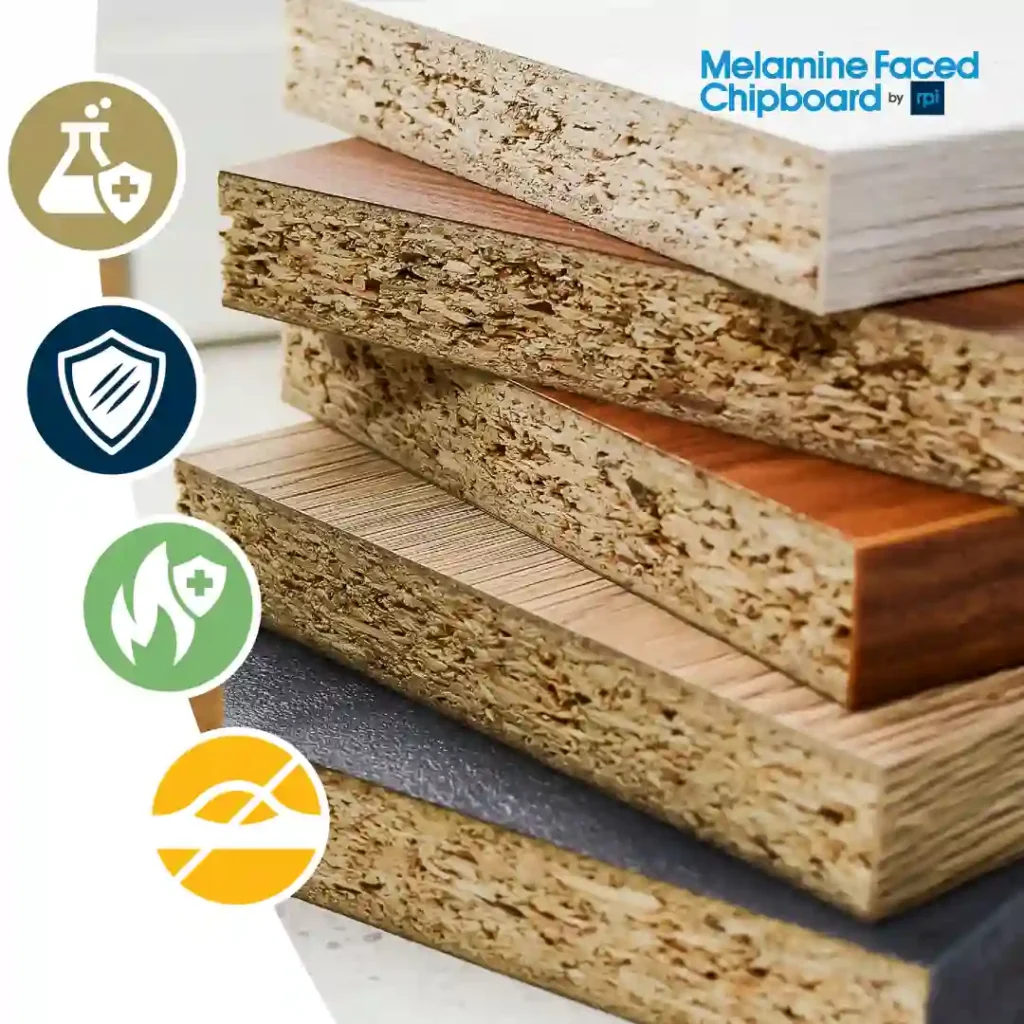
MFC is made by bonding decorative melamine-impregnated paper onto a chipboard core, giving it a smooth, scratch- and stain-resistant surface. It’s widely used in cabinetry, wardrobes, shelving, and kitchen and bathroom furniture thanks to its design versatility and cost-effectiveness — easy to clean, easy to install, and compatible with edge banding and modern fittings.
The key factor for kitchen and bathroom use isn’t the melamine surface itself, but the core underneath it. For full details, see our HMR Particle Board guide.
MFC in Kitchens
Why MFC Works Well for Kitchen Furniture
- Durable and Strong — High resistance to impact, scratches, and moisture, suited to areas exposed to splashes of water and oil.
- Easy to Clean — The smooth melamine surface wipes clean with a damp cloth, including stubborn stains.
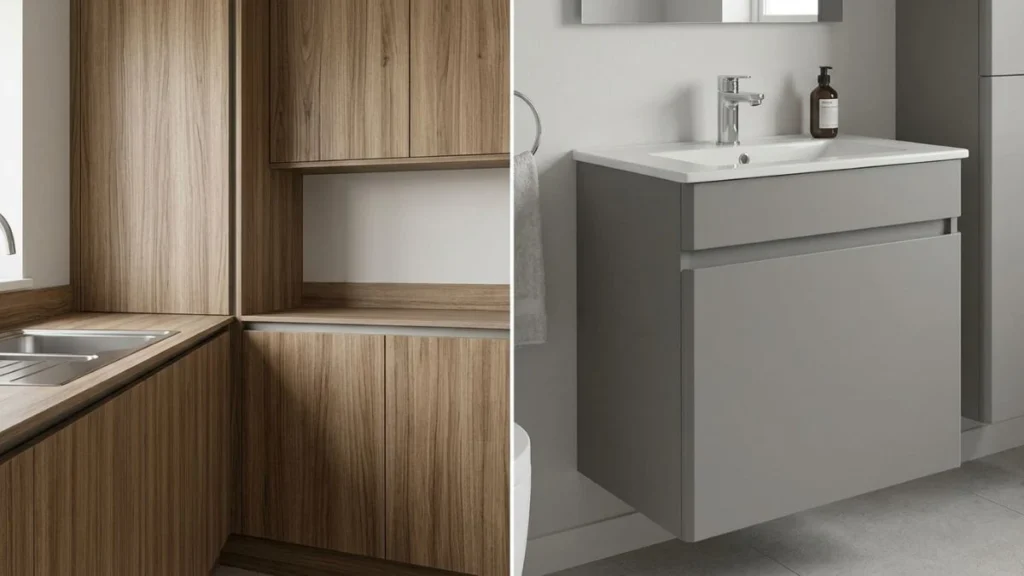
- Variety of Colors and Textures — Available in finishes that mimic natural wood, stone, or contemporary patterns, letting you match a specific kitchen style.
- Mudah Dipasang — Cuts and installs efficiently, speeding up kitchen renovation projects.
- Terjangkau — More budget-friendly than solid wood or stainless steel, without sacrificing appearance.
Kitchen Design Ideas with MFC
- Minimalis — White or gray MFC paired with stainless steel appliances for a clean, modern look.
- Classic — Natural wood-texture MFC (oak, cherry-style finishes) for a warm, elegant feel.
- Rustic — Earth-tone MFC (brown, cream, green) for a natural, comfortable look.
- Industrial — Dark-colored MFC with a concrete or metal-style texture.
MFC in Bathrooms
Apakah MFC Cocok untuk Kamar Mandi?
MFC can be used in bathrooms with the right precautions. Standard MFC is not inherently water-resistant, but MFC built on an HMR (High Moisture Resistant) core performs well in humid spaces when properly installed.
Conditions That Affect MFC Performance in Bathrooms
- Humidity levels — Sustained high humidity can degrade an untreated (standard-core) chipboard over time.
- Direct water contact — Splash zones near sinks or showers can damage exposed edges if not properly sealed.
- Ventilation — A well-ventilated bathroom reduces overall moisture exposure, protecting all materials in the room.
Best Practices for MFC in Bathroom Furniture
- Choose HMR-core MFC for any bathroom application — this is the single biggest factor in long-term performance.
- Protect all exposed edges with waterproof edge banding to prevent water infiltration into the core.
- Avoid direct water contact — position vanity cabinets beside sinks rather than directly under taps or shower spray.
- Use silicone sealing on joints, wall contact points, and base areas to keep moisture from seeping in.
- Maintain airflow with an exhaust fan or good ventilation to minimize damp buildup inside cabinetry.
Common Bathroom Applications
- Lemari rias dinding
- Over-sink storage units
- Rak untuk handuk dan perlengkapan mandi
- Kompartemen penyimpanan tersembunyi
Many designers also pair HMR-core MFC with additional water-resistant finishing, such as PVC or aluminum skirting, to further extend its lifespan in wet environments.
Choosing the Right Core: Kitchen vs. Bathroom
| Aplikasi | Recommended Core | Why |
|---|---|---|
| Kitchen cabinets, countertops | HMR | Regular exposure to splashes, steam, and spills |
| Bathroom vanities, storage | HMR | Sustained humidity and direct water contact risk |
| Dry kitchen/bathroom areas (e.g. wall panels away from water) | Standar | Lower moisture exposure, cost efficiency |
Both spaces share the same underlying rule: surface finish (melamine) determines look and day-to-day cleanability, but core type (standard vs. HMR) determines long-term moisture performance. Choosing MFC on the wrong core for a wet application is the most common mistake in both kitchen and bathroom projects.
Get Kitchen- and Bathroom-Ready MFC from RPI
PT. Rimba Partikel Indonesia (RPI) manufactures MFC boards on both standard and HMR cores, with premium melamine surfaces designed for durability and easy cleaning in high-use areas. Whether you’re planning a stylish, budget-efficient kitchen or a moisture-resistant bathroom vanity setup, RPI’s MFC range covers cabinetry, shelving, and modular storage needs.
Contact us at admin-rpi@rimbapartikel.com atau chat with us on WhatsApp to discuss the right core and finish for your project.
FAQ
Can I use standard MFC in a bathroom?
It’s not recommended for areas with direct water exposure or sustained humidity. HMR-core MFC, combined with proper edge sealing, is the safer choice for bathroom furniture.
Does MFC work well for kitchen countertops?
MFC with an HMR core handles typical kitchen splash and moisture exposure well, though for surfaces with heavy, sustained water contact, additional edge protection is recommended.
What’s the difference between MFC for kitchens and MFC for bathrooms?
Structurally, the same HMR-core MFC suits both — the difference is mainly in application details like edge sealing, ventilation, and placement relative to direct water contact, which matter more in bathrooms due to sustained humidity.
Kesimpulan
MFC is a practical, attractive choice for both kitchen and bathroom furniture — as long as the core is matched to the moisture exposure. HMR-core MFC, proper edge sealing, and good ventilation are what make the difference between furniture that lasts and furniture that doesn’t. With the wide range of colors and textures available, MFC lets you design a kitchen or bathroom that looks the part while standing up to daily use.