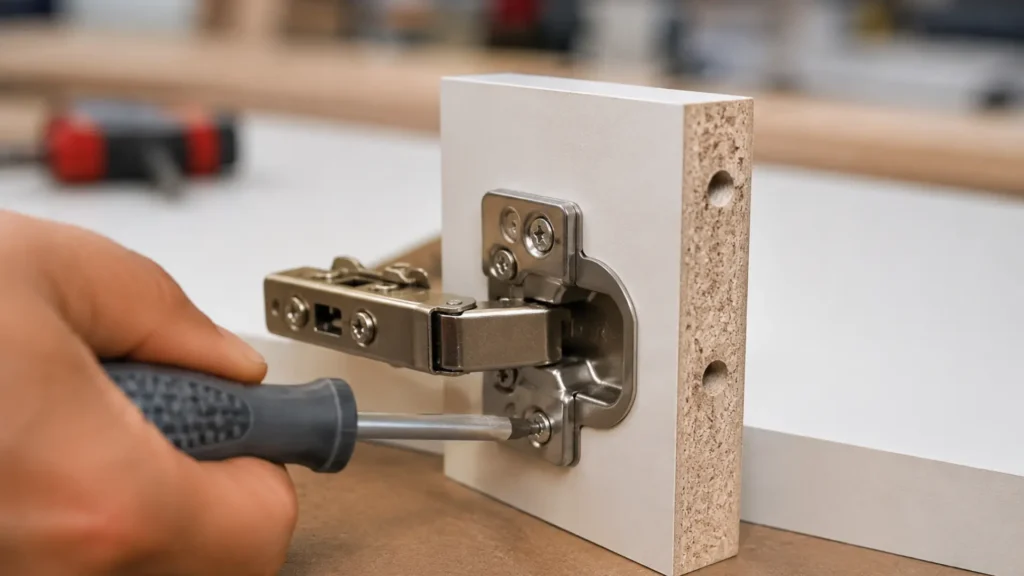
mff curved furniture components

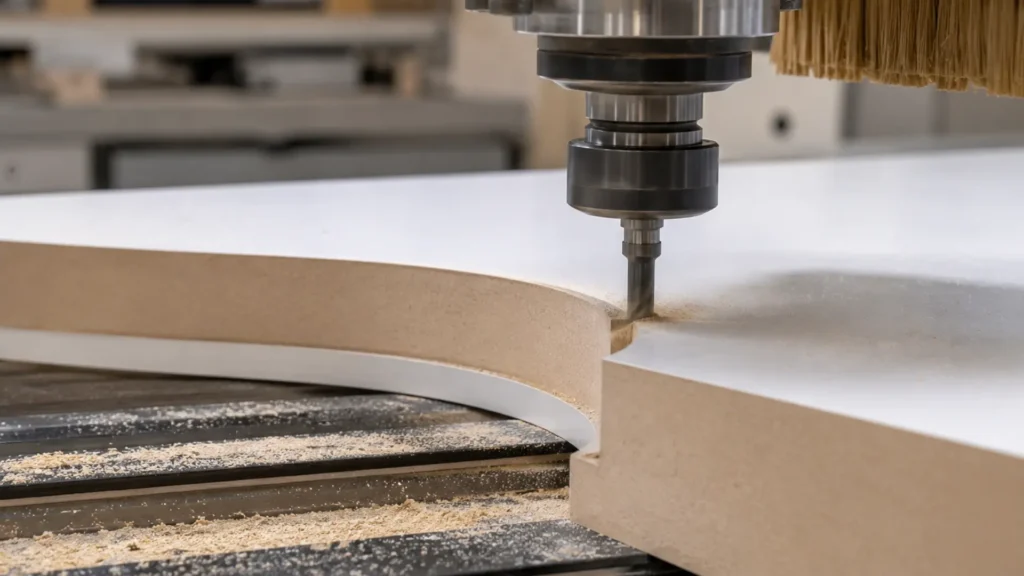
MFF for Curved and Routed Furniture Components: Why the Core Matters

Quick answer: MFF (Melamine Faced Fiberboard) uses a dense, homogeneous MDF/HDF core — with no wood chips or voids — which makes it the more reliable material for curved cuts, circular profiles, and routed edge details than particle board-core MFC. For straight-cut cabinet carcasses, MFC remains the more economical choice; for anything that needs to

MFF for Curved and Routed Furniture Components: Why the Core Matters Read More »
mfc vs mff

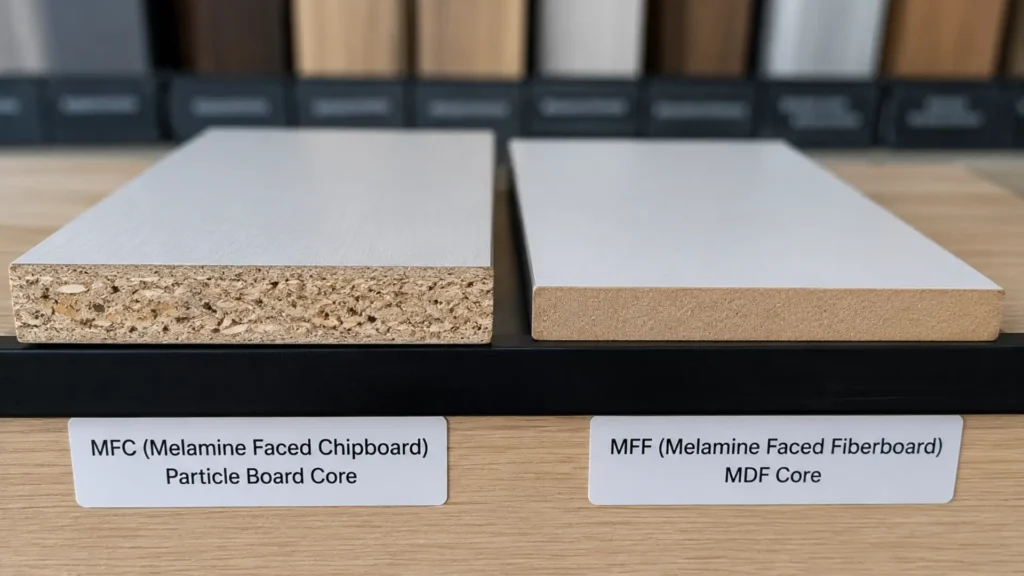
MFC vs MFF: Which Melamine-Faced Board Is Right for You?

Quick answer: MFC (Melamine Faced Chipboard) has a particle board core and is the standard choice for most furniture — cabinets, wardrobes, shelving. MFF (Melamine Faced Fiberboard/MDF) has a denser MDF core, machines more cleanly for detailed edges and profiles, and is available in thinner options down to 2.5–3mm for use as a surface layer.

MFC vs MFF: Which Melamine-Faced Board Is Right for You? Read More »

particle board storage handling

Storing and Handling Particle Board and MFC Before Fabrication: A Warehouse Guide

Quick answer: Particle board and MFC should be stored flat, off the ground, fully supported across their surface, and kept away from direct moisture and sharp humidity swings before cutting or fabrication. Panels brought into a new climate — especially after ocean freight — perform best when allowed to acclimatize to the workshop’s ambient humidity

Storing and Handling Particle Board and MFC Before Fabrication: A Warehouse Guide Read More »

particle board screw holding capacity

Screw Holding Capacity in Particle Board and MFC: What Furniture Manufacturers Need to Know

Quick answer: Screw holding capacity — how firmly a panel grips a screw or fastener without pulling loose — depends mainly on board density, thickness, and where the fastener is placed (face vs. edge). Under JIS A 5908:2022, standard particle board of 15mm+ thickness must achieve a minimum face screw holding strength of 400N. Higher-density

Screw Holding Capacity in Particle Board and MFC: What Furniture Manufacturers Need to Know Read More »

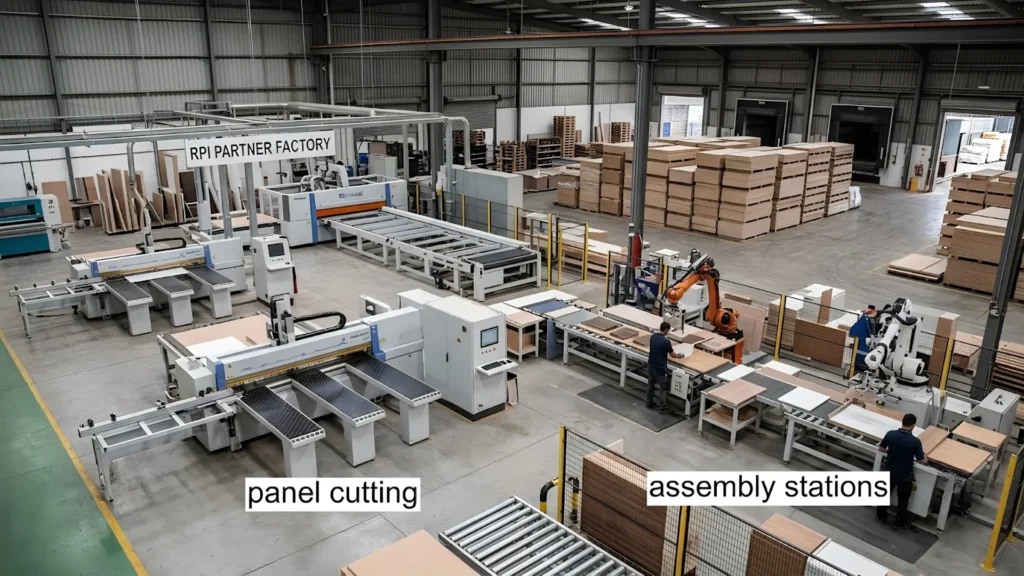
Furniture manufacturing facility using particle board and MFC panel material

Furniture Manufacturing: A Material Sourcing Guide for Producers

Furniture manufacturing at scale depends on consistent, certified engineered wood material — particle board, MFC, MDF, and MFF each suit different parts of a production line. Getting material selection and supplier reliability right affects production speed, finishing cost, and compliance with destination-market regulations. Whether you’re running an RTA (ready-to-assemble) furniture line, a cabinet factory, or

Furniture Manufacturing: A Material Sourcing Guide for Producers Read More »

Furniture Styles for Home and Why MFC is the Ideal Choice

Melamine Faced Chipboard (MFC) is emerging as a highly versatile material. As well as furniture manufacturing, it offers a unique blend of strength, aesthetic appeal and adaptability. With this, many homeowners are using it as a material for making furniture. Before exploring furniture styles, understand what makes MFC the ideal material: MFC Board Advantages →

Furniture Styles for Home and Why MFC is the Ideal Choice Read More »

Melamine Faced Chipboard (MFC Board) by RPI with AICA Indonesia

Melamine Faced Chipboard: A Versatile and Durable Material

Melamine faced chipboard (MFC) is a popular and versatile material used in the construction and furniture industries. It is a composite wood product that combines the affordability and strength of chipboard with the decorative appeal of melamine resin. For all key advantages of MFC board: MFC Board: 8 Key Advantages → This combination results in

Melamine Faced Chipboard: A Versatile and Durable Material Read More »

Scroll to Top